
Introduction
Veganske pizzasnegle are Danish-style vegan pizza rolls made from soft, yeast-raised dough rolled around a savoury filling and sliced into spiral-shaped portions. The Danish word veganske means vegan, while pizzasnegle translates to pizza snails or pizza rolls. They are a popular style of homemade snack because they combine the familiar flavours of pizza with the convenience of a small, portable pastry.
A typical recipe uses flour, yeast, water, oil, tomato sauce, vegetables, herbs, and plant-based cheese. Other versions include seasoned soy strips as a plant-based alternative to ham. The rolls are baked until lightly golden and can be served warm, packed into lunchboxes, taken on picnics, or prepared ahead for parties.
One of the main advantages of veganske pizzasnegle is their flexibility. The dough can be made with ordinary wheat flour or adjusted with wholemeal flour, while the filling can include mushrooms, spinach, peppers, olives, sun-dried tomatoes, or vegan cheese. This makes them suitable for different tastes and ingredient preferences.
Quick Information Table
| Detail | Information |
|---|---|
| Main name | Veganske pizzasnegle |
| English meaning | Vegan pizza rolls |
| Cuisine association | Danish-style homemade baking |
| Food category | Savoury baked snack |
| Main dough ingredients | Flour, yeast, water, oil, and salt |
| Common filling | Tomato sauce, vegetables, herbs, and vegan cheese |
| Protein alternatives | Soy strips or other plant-based meat alternatives |
| Shape | Rolled spiral slices |
| Cooking method | Oven-baked |
| Typical oven temperature | Around 175–205°C, depending on recipe |
| Preparation time | Approximately 30 minutes of active work |
| Rising time | Usually 1–2 hours, depending on the dough |
| Serving occasions | Lunchboxes, snacks, picnics, parties, and brunch |
| Dietary style | Vegan when all ingredients are plant-based |
| Storage | Refrigerated or frozen |
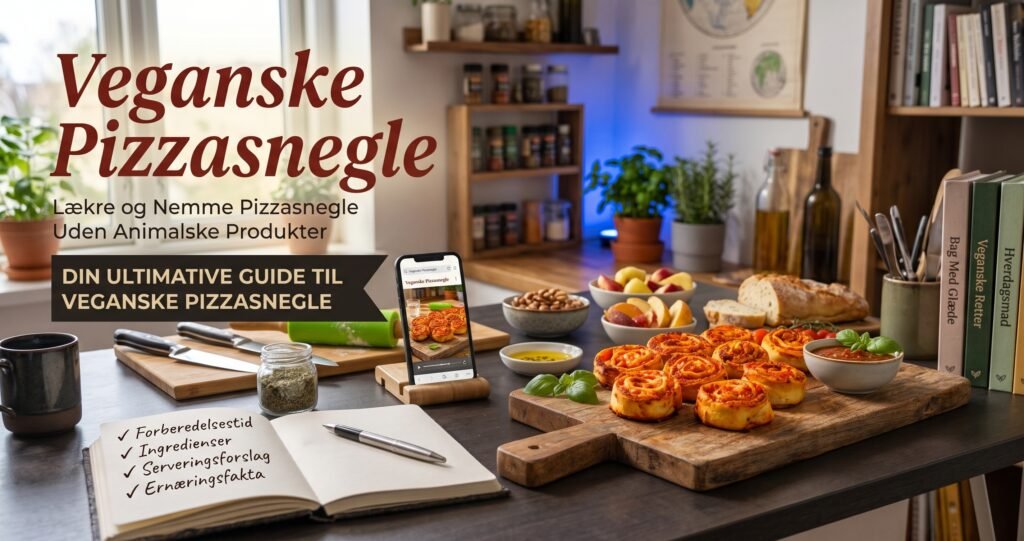
What Are Veganske Pizzasnegle?
Veganske pizzasnegle are small spiral-shaped savoury rolls prepared with vegan pizza dough and a plant-based filling. Instead of using conventional cheese, ham, or other animal-derived ingredients, they rely on vegan alternatives and vegetables to create their flavour.
The preparation follows a simple idea. First, a yeast dough is mixed and allowed to rise. It is then rolled into a rectangle, covered with tomato sauce and selected fillings, and rolled into a long cylinder. The cylinder is sliced into individual rounds and baked.
The spiral shape gives each piece several layers of dough and filling. This helps distribute the sauce, herbs, vegetables, and cheese throughout the snack.
Veganske pizzasnegle are especially useful when a meal needs to be prepared in individual portions. They can be eaten without cutlery, making them convenient for children, students, office workers, and people travelling.
Main Ingredients Used in Veganske Pizzasnegle
The ingredients can vary considerably between recipes, but most versions use a few basic components.
1. Vegan Pizza Dough
The dough provides the soft and slightly chewy base. Common ingredients include:
- Wheat flour
- Lukewarm water
- Fresh or dried yeast
- Vegetable oil or olive oil
- Salt
- A small amount of sugar, depending on the recipe
Some recipes include wholemeal or rye flour to add flavour and texture. Others use wheat gluten to create a more elastic dough with a lighter structure.
Yeast is important because it helps the dough rise, producing a softer result after baking. Kneading also develops the gluten structure, which makes the dough easier to roll and shape.
2. Tomato Sauce
Tomato sauce gives the filling its familiar pizza flavour. It can be prepared at home or purchased ready-made.
Common ingredients include:
- Tomato passata or pizza sauce
- Tomato paste
- Garlic
- Oregano
- Basil
- Black pepper
- Salt
A thick sauce is generally easier to use because it is less likely to leak out when the dough is rolled and sliced.
3. Vegetables
Vegetables add colour, texture, and flavour. Popular choices include:
- Red bell peppers
- Onions
- Mushrooms
- Spinach
- Carrots
- Sun-dried tomatoes
- Olives
Vegetables should be chopped into small pieces so they can be spread evenly across the dough. Ingredients with high water content may need to be cooked or drained first to prevent the rolls from becoming soggy.
4. Vegan Cheese
Vegan cheese is often added to provide a creamy, savoury filling. Plant-based mozzarella-style cheese is a common choice because it is designed for pizza and baking.
The amount depends on personal preference. Too much cheese can make the filling heavy and cause it to escape during baking.
5. Plant-Based Protein
Some recipes use soy strips as a substitute for ham or chicken. These are usually rehydrated in hot water and vegetable stock before being seasoned.
Other possible fillings include cooked lentils, plant-based mince, tofu pieces, or finely chopped mushrooms. The choice depends on the desired taste and texture.
A Danish recipe for vegan pizza rolls, for example, uses soy strips, red pepper, onion, tomato sauce, paprika, oregano, and grated vegan cheese. Nemt, sundt og lækkert+1
How to Make Veganske Pizzasnegle at Home
Making veganske pizzasnegle at home is relatively straightforward. The main stages are preparing the dough, making the filling, shaping the rolls, allowing them to rise, and baking them.
The following is a practical recipe for approximately 12–15 medium-sized rolls.
Ingredients for the Dough
- 20g fresh yeast
- 250ml lukewarm water
- 300g wheat flour
- 75g wheat gluten or additional wheat flour
- 2 tablespoons vegetable oil
- 1 teaspoon sugar
- 1½ teaspoons salt
Ingredients for the Filling
- 100g soy strips
- ½–1 cup thick pizza sauce or tomato passata
- 1 red bell pepper, finely chopped
- 1 small onion, finely chopped
- 100–125g grated vegan cheese
- ½ vegetable stock cube
- 2 teaspoons smoked or sweet paprika
- 1 teaspoon dried oregano
- Black pepper to taste
These quantities are a practical home recipe based on common Danish vegan pizza-roll ingredients. The exact filling can be adjusted according to taste.
Step 1: Prepare the Yeast Dough
Pour the lukewarm water into a large mixing bowl and dissolve the yeast. Add the oil and sugar, then stir until combined.
Gradually add the flour, wheat gluten, and salt. Mix the ingredients until a dough forms.
Knead for approximately 5–10 minutes by hand or using a stand mixer. The finished dough should be soft, smooth, and slightly elastic.
If it feels excessively sticky, add a small amount of flour. If it seems too dry, add a little water.
Cover the bowl with a clean kitchen towel and leave the dough to rise in a warm place for approximately 1–1½ hours, or until it has noticeably increased in size.
Step 2: Prepare the Soy Filling
Place the soy strips in a heat-resistant bowl or saucepan. Pour over boiling water and add half a vegetable stock cube.
Allow the strips to soak according to the package instructions. Once softened, drain them thoroughly and press out excess water.
Season with paprika, oregano, black pepper, and a little salt if required.
If you prefer a more colourful filling, finely chopped vegetables can be prepared while the soy strips are soaking.
Step 3: Prepare the Vegetables
Finely chop the onion and red pepper. If using mushrooms or spinach, prepare those ingredients as well.
For a richer flavour, lightly cook the onion and pepper in a little oil before combining them with the other filling ingredients.
Allow cooked vegetables to cool slightly before spreading them over the dough. This helps prevent excess moisture from affecting the dough.
Step 4: Roll Out the Dough
Once the dough has risen, transfer it to a lightly floured work surface.
Roll it into a large rectangle of even thickness. Try to avoid making the centre too thick or the edges too thin, as uneven dough can produce inconsistent rolls.
Spread a thin, even layer of pizza sauce across the surface. Leave a small border around the edges to help seal the roll.
Step 5: Add the Filling
Distribute the seasoned soy strips, chopped vegetables, and grated vegan cheese across the tomato sauce.
Spread the ingredients evenly rather than placing too much filling in one area. This helps each slice maintain a similar shape and makes rolling easier.
Avoid using too much sauce because excess liquid can escape during baking.
Step 6: Roll and Slice
Starting from one of the longer sides, roll the dough firmly into a long cylinder.
Keep the roll reasonably tight, but avoid pressing so hard that the filling is pushed out.
Use a sharp knife to cut the cylinder into approximately 12–15 equal slices. Each piece should be around 2–3cm thick, depending on the desired size.
Place the rolls cut-side up on baking trays lined with baking paper.
Step 7: Allow the Rolls to Rise Again
Cover the shaped pizzasnegle loosely with a clean kitchen towel.
Let them rest for approximately 30 minutes. This second rising period allows the dough to become lighter and helps the rolls maintain a soft texture after baking.
Step 8: Bake Until Golden
Preheat the oven to approximately 200°C fan-assisted.
Bake the rolls for around 20–30 minutes, depending on their size and the oven. Check that the dough is fully baked and lightly golden.
Smaller rolls may need less time, so begin checking them earlier. Allow the finished pizzasnegle to cool slightly before serving.
The preparation method and ingredient combinations are consistent with established Danish vegan pizza-roll recipes, although individual baking temperatures and times vary. Nemt, sundt og lækkert+2
Popular Variations of Veganske Pizzasnegle
One of the reasons these rolls are so versatile is that the filling can be changed without completely altering the preparation method.
1. Classic Tomato and Vegan Cheese
This is one of the simplest versions. It uses tomato sauce, grated vegan cheese, oregano, basil, and black pepper.
Sun-dried tomatoes can be added for a deeper flavour. This combination is suitable for people who prefer a familiar pizza taste without meat substitutes.
2. Vegan Ham-Style Pizza Rolls
Some recipes use seasoned soy strips to create a filling inspired by traditional ham pizza rolls.
The soy strips absorb the vegetable stock and spices, giving them a savoury taste. Paprika and oregano help create a flavour that works well with tomato sauce and vegan cheese.
This variation is particularly useful for people who want a more substantial snack.
3. Spinach and Mushroom Pizza Rolls
Spinach and mushrooms create a vegetable-focused filling. Mushrooms add a savoury flavour, while spinach provides colour and a softer texture.
For best results, cook the mushrooms first and remove excess liquid before adding them to the dough.
4. Olive and Sun-Dried Tomato Rolls
Black olives and sun-dried tomatoes provide a stronger Mediterranean-inspired flavour.
Garlic, basil, and tomato paste work particularly well with these ingredients. A little vegan cheese can be added, although the filling can also be prepared without it.
5. Pesto Pizza Rolls
Green vegan pesto can be used instead of traditional tomato sauce. It can be combined with spinach, mushrooms, sun-dried tomatoes, and plant-based cheese.
This version has a different flavour from classic pizza rolls and is useful when preparing several varieties for a gathering. Micadeli+1
What Makes Veganske Pizzasnegle Different From Regular Pizza Rolls?
The main difference is the choice of ingredients. Traditional pizza rolls may contain dairy cheese, ham, pepperoni, milk, or egg-based ingredients. Vegan versions replace these with plant-based alternatives.
| Feature | Traditional Pizza Rolls | Vegan Pizza Rolls |
|---|---|---|
| Cheese | Dairy cheese | Plant-based cheese or no cheese |
| Meat filling | Ham, pepperoni, or chicken | Soy strips, tofu, vegetables, or plant-based alternatives |
| Dough | May contain milk or other animal products | Made without animal-derived ingredients |
| Sauce | Usually tomato-based | Tomato-based or vegan pesto |
| Flavour | Depends on meat and dairy ingredients | Depends on vegetables, herbs, and plant-based fillings |
It is important to check every ingredient label. Some ready-made pizza sauces, breads, pesto products, and cheese alternatives may contain ingredients that are not vegan.
A dough made with water, flour, yeast, oil, and salt is generally easy to prepare without animal products.
Nutritional Value and Dietary Benefits
Veganske pizzasnegle can provide carbohydrates from flour, protein from ingredients such as soy, and some fibre and micronutrients from vegetables.
However, their nutritional value depends on the recipe, portion size, and filling.
Carbohydrates for Energy
Wheat flour is the main ingredient in most pizza-roll doughs. It provides carbohydrates, which are an important source of energy.
Wholemeal flour can be used for part of the dough to increase its fibre content and create a slightly nuttier flavour.
Plant-Based Protein
Soy strips, tofu, and other plant-based protein ingredients can make the rolls more filling.
Wheat gluten can also increase the protein content of the dough, although it is unsuitable for people with coeliac disease or gluten sensitivity.
Vegetables and Fibre
Ingredients such as peppers, spinach, onions, mushrooms, and carrots add fibre and a range of vitamins and minerals.
Using several vegetables can also improve the variety of flavours and textures in the filling.
Salt and Fat Considerations
Vegan cheese, stock cubes, prepared sauces, and meat substitutes can contain considerable amounts of salt. Oil and cheese alternatives may also increase the fat content.
Choosing suitable portions and checking food labels can help people adjust the recipe to their dietary needs.
Vegan does not automatically mean low-calorie or nutritionally balanced. The overall ingredients and portion size matter.
Tips for Making Soft and Delicious Veganske Pizzasnegle
A few simple techniques can make a noticeable difference to the final result.
Use Lukewarm Water
Water that is too hot can damage the yeast and prevent the dough from rising properly. Lukewarm water is generally the best choice.
Knead the Dough Properly
Kneading helps develop the gluten structure, making the dough elastic and easier to roll. A well-kneaded dough is less likely to tear when filled.
Avoid Excess Filling
Too much sauce or filling can make the rolls difficult to shape. It can also cause the layers to separate during baking.
Use Thick Tomato Sauce
A thick pizza sauce stays inside the dough more easily than a watery sauce. If your sauce is thin, reduce it in a saucepan before using it.
Cut Even Slices
Try to make each slice approximately the same thickness. This helps the rolls bake more evenly and makes portion sizes consistent.
Do Not Skip the Second Rise
Allowing the shaped rolls to rise again helps create a softer and lighter texture. Skipping this stage can result in denser rolls.
How to Store and Freeze Veganske Pizzasnegle
Veganske pizzasnegle are convenient for meal preparation because they can be made in advance and stored for later.
Refrigerating
Allow freshly baked rolls to cool before placing them in an airtight container. Store them in the refrigerator and follow safe food-storage practices.
A general recipe recommendation is to consume refrigerated leftovers within approximately three days, provided they have been cooled promptly and kept properly chilled. Måltider
Freezing
These rolls can also be frozen.
For best results:
- Allow the baked rolls to cool completely.
- Arrange them in a freezer-safe container or bag.
- Separate layers with baking paper if necessary.
- Label the container with the preparation date.
- Freeze in individual portions for convenient use.
One recipe recommends freezing the finished rolls for up to one month. Storage life can vary with ingredients and freezer conditions, so use suitable food-storage guidance. Nemt, sundt og lækkert+1
Reheating
Reheat refrigerated or thawed rolls in an oven until thoroughly hot. A moderate oven helps restore some of their original texture.
A microwave is quicker, but it may make the dough softer rather than crisp. Avoid repeatedly reheating the same portion.
When Can You Serve Veganske Pizzasnegle?
These pizza rolls are suitable for several occasions because they are easy to portion and do not require complicated serving arrangements.
Lunchboxes
Their small size makes them practical for school and work lunches. They can be paired with fresh vegetables, fruit, or a small salad.
Children’s Parties
The spiral shape and familiar pizza flavour make them an appealing option for children’s gatherings. Mild tomato and cheese fillings are often a good starting point.
Picnics and Travel
Because they can be eaten by hand, they are convenient for picnics and journeys. They should still be transported and stored at safe temperatures, particularly when the filling contains cheese alternatives or protein substitutes.
Brunch and Casual Gatherings
A tray of mixed pizza rolls can be served alongside salads, dips, and other savoury snacks.
Offering different fillings, such as classic tomato, pesto, and vegetable versions, gives guests more variety.
Frequently Asked Questions About Veganske Pizzasnegle
1. What does veganske pizzasnegle mean?
Veganske pizzasnegle is Danish for vegan pizza rolls. They are spiral-shaped savoury pastries made with plant-based dough and pizza-inspired fillings.
2. Are veganske pizzasnegle completely vegan?
They are vegan when all ingredients are plant-based. This includes the dough, sauce, cheese alternative, and any meat substitutes. Always check product labels.
3. What ingredients are needed?
The basic ingredients include wheat flour, yeast, water, oil, salt, tomato sauce, vegetables, herbs, and optional vegan cheese or plant-based protein.
4. Can I make them without vegan cheese?
Yes. You can leave out the cheese and use vegetables, olives, pesto, or seasoned soy strips instead.
5. Can I use ordinary wheat flour?
Yes. Ordinary wheat flour works well for the dough. Wheat gluten is optional and can be replaced with additional flour, although the texture may be slightly different.
6. How long does the dough need to rise?
Most recipes allow approximately one to one and a half hours for the first rise. The shaped rolls may then need another 30–45 minutes before baking.
7. What temperature should I use?
A temperature between 175°C and 205°C is used in different recipes. The correct setting depends on the size of the rolls, the oven, and whether it uses a fan.
8. Can I prepare veganske pizzasnegle in advance?
Yes. You can prepare the dough and filling ahead of time, or bake the rolls and store them for later. Refrigeration and freezing are both practical options.
9. Can veganske pizzasnegle be frozen?
Yes. Allow the baked rolls to cool completely before freezing them in suitable airtight packaging. They can then be reheated when needed.
10. What is the best filling for vegan pizza rolls?
Tomato sauce, vegan cheese, peppers, onions, oregano, and seasoned soy strips make a popular combination. Pesto, mushrooms, spinach, olives, and sun-dried tomatoes are other good choices.
11. Are veganske pizzasnegle suitable for children?
They can be suitable for children when prepared with age-appropriate ingredients and textures. Check for allergies, particularly to wheat, soy, and other ingredients used in the filling.
12. Can I make gluten-free veganske pizzasnegle?
Yes, but ordinary wheat flour needs to be replaced with a suitable gluten-free flour blend. The dough may require a different binder and adjustments to its liquid content, so a gluten-free-specific recipe is recommended.
Final Thoughts
Veganske pizzasnegle are a versatile Danish-style snack that combines soft homemade dough with savoury plant-based pizza fillings. Their spiral shape makes them easy to serve, while their flexible ingredients allow cooks to create different flavours for everyday meals, lunchboxes, picnics, and parties.
A traditional version can include tomato sauce, vegan cheese, vegetables, and seasoned soy strips, while simpler alternatives can use pesto, spinach, mushrooms, olives, or sun-dried tomatoes. Proper kneading, sufficient rising time, and an even filling are the main factors behind a soft and flavourful result.
Another advantage is that these rolls can be prepared ahead, refrigerated, or frozen for later use. Whether someone follows a vegan diet or simply wants to explore more plant-based snacks, veganske pizzasnegle offer a practical and enjoyable homemade option.
FuturesBrief.co.uk




One Comment