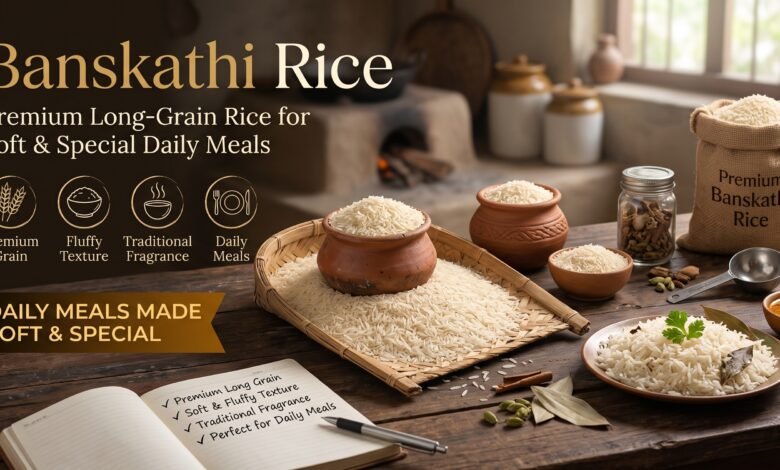
Banskathi rice is a traditional non-Basmati rice variety associated with West Bengal, India. It is valued for its slender grains, distinctive natural aroma, and versatility in everyday meals and special rice dishes. Although it is less internationally recognised than Basmati, it has an established place in Bengal’s rice market and is available in several commercial grades and processing styles.
Quick Information Table
| Detail | Information |
|---|---|
| Rice name | Banskathi rice (also spelled Banshkathi or Banskati) |
| Main region associated with it | West Bengal, India |
| Rice category | Non-Basmati rice |
| Grain appearance | Usually described as slender and elongated; commercial grades can vary |
| Aroma | Mild, natural aroma |
| Taste | Mild, sometimes described as slightly sweet |
| Cooked texture | Depends on the grade and processing; commonly marketed as fluffy and suitable for separate-grain cooking |
| Common uses | Steamed rice, everyday meals, Bengali pulao, biryani and fried rice |
| Available forms | Parboiled and polished varieties, with other processing styles also marketed |
| Main appeal | Slender grains, aroma, versatility and value as a non-Basmati option |

What Is Banskathi Rice?
Banskathi rice is a traditional rice variety associated particularly with West Bengal. It is sold as a non-Basmati rice and is known in regional markets for its slim grain shape and distinctive character. It is used in ordinary household meals as well as recipes where cooks want rice with an attractive appearance and a pleasant aroma.
The name is also written as Banshkathi or Banskati. These spellings generally refer to the same market variety, although buyers should check the product label because rice names and commercial grades can differ between sellers.
Banskathi is not the same as Basmati rice. Both may be marketed for their long, slender grains, but Banskathi is classified as non-Basmati. Its appeal comes from its own regional identity, cooking qualities and availability.
Origin and Background of Banskathi Rice
West Bengal is the region most closely associated with Banskathi rice. It is part of the wider Bengali rice culture, where rice is a central everyday food and different varieties are selected according to their grain shape, aroma, texture and suitability for particular dishes.
Some regional accounts connect the name Banskathi with the appearance of the grain. The Bengali word is associated with a bamboo stick: the thin, straight and firm shape of the rice is compared with a narrow piece of bamboo. This is a traditional explanation of the name rather than a scientifically established account of its origin. TV9 Bangla News+1
Banskathi is also recognised in Indian rice research literature. A publication from the ICAR-National Rice Research Institute identifies it as a long-slender grain variety popular in eastern India and notes that it commands a relatively high market price in that region. This supports its regional importance beyond ordinary retail descriptions. Central Rice Research Institute
Main Characteristics of Banskathi Rice
1. Slender Grain Shape
One of the most noticeable features of Banskathi rice is its narrow grain shape. It is commonly sold as a long-grain variety, although descriptions and measurements can vary between commercial products. Some sellers describe it as medium-grain, while others emphasise its long and thin appearance.
The grains are often marketed as a suitable choice for people who prefer rice that looks light and elegant on the plate. The exact length depends on the particular grade and processing method.
2. Natural Aroma
Banskathi rice is commonly described as having a mild, pleasant aroma. It is not generally positioned as an intensely fragrant rice like some well-known aromatic varieties. Instead, its fragrance is usually presented as subtle and suitable for everyday meals.
The strength of the aroma can vary depending on the crop, storage conditions, freshness and processing. Buyers should not expect every packet to have exactly the same fragrance.
3. Taste and Texture
The taste of Banskathi rice is generally described as mild, with some commercial descriptions mentioning a slightly sweet character. This allows it to complement strongly flavoured curries, vegetables, lentils and meat dishes without overpowering them.
Its cooked texture depends on the grain quality and preparation method. Some products are promoted for fluffy, separate grains, while other descriptions of Banskathi varieties mention a softer texture. Water quantity, soaking time and cooking duration also influence the final result. Ametheus+2
4. Non-Basmati Classification
Banskathi is a non-Basmati rice variety. This distinction is important because a long, thin grain does not automatically make a rice variety Basmati.
Some sellers may use descriptions such as “Banskathi Basmati” to highlight the grain’s appearance. However, buyers should check the actual variety and packaging information rather than assuming it is officially Basmati rice. Ametheus+1
Types and Processing Styles
Banskathi rice can be found in different commercial forms. Processing influences its colour, cooking behaviour and texture.
Parboiled Banskathi Rice
Parboiled rice is processed by soaking, steaming and drying the paddy before milling. This treatment changes the grain’s structure and can help reduce breakage during milling. Parboiled Banskathi is offered by rice sellers for household and commercial use.
Product specifications can differ. One commercial listing, for example, describes a parboiled product with a maximum moisture level of 14%, a maximum damaged or discoloured grain allowance of 2%, and an average grain length of 7.02 mm. These are specifications for that particular product, not universal standards for all Banskathi rice. Ametheus+1
Polished Banskathi Rice
Polished rice has had much of its outer bran layer removed during milling. This produces a cleaner, lighter appearance and is a common retail form.
The degree of polishing can affect the amount of bran and some nutrients remaining in the grain. Consumers who prefer less processed rice should compare packaging labels and look for products specifically described as unpolished or brown rice.
Different Grain Grades
Banskathi is marketed in different grades, including products described as long-grain, medium-grain or extra-large. These descriptions are not always consistent between sellers. Grain length, broken-grain percentage, moisture and milling quality are more useful details to check when comparing products.
Nutritional Value of Banskathi Rice
Banskathi rice is primarily a source of carbohydrates, which provide energy. Like other white rice varieties, it also contains some protein and small amounts of fat. Its exact nutritional composition depends on the crop, milling process and product.
One retail product listing gives the following nutrition information per 100 grams:
| Nutrient | Listed amount |
|---|---|
| Energy | 350 kcal |
| Protein | 7.4 g |
| Total fat | 0.5 g |
| Carbohydrates | 77.8 g |
| Dietary fibre | 1.2 g |
| Sodium | 5 mg |
These figures relate to that particular packaged product and should not be treated as a guaranteed nutritional profile for every Banskathi variety. bigbasket
Is Banskathi Rice Healthy?
Banskathi rice can be included in a balanced diet. It provides carbohydrates for energy and some protein, but polished white rice generally contains less fibre than whole-grain rice because much of the bran is removed.
For a more balanced meal, it can be served with vegetables, lentils, beans, fish, eggs or other protein sources. Portion size also matters, particularly for people who need to manage their carbohydrate intake.
There is not enough reliable variety-specific evidence to claim that Banskathi rice has a low glycemic index or is suitable for treating diabetes. People managing blood glucose should consider their overall meal, portion size and individual dietary advice rather than relying on broad marketing claims.
Common Uses of Banskathi Rice
Banskathi rice is versatile and can be used in several types of cooking.
Everyday Steamed Rice
It can be prepared as plain boiled or steamed rice and served with dal, vegetables, fish, chicken or meat curries. Its mild flavour makes it suitable for meals where the accompanying dishes provide most of the seasoning.
Bengali Pulao
Banskathi rice is also marketed for Bengali-style pulao. It can be cooked with whole spices, vegetables, nuts or other ingredients, depending on the recipe. The grain’s appearance and aroma can make it a suitable option for a fragrant rice dish.
Biryani
Some commercial sellers recommend Banskathi for homemade biryani. For this use, selecting a consistent long-grain grade is important. The rice should be cooked carefully so that it does not become too soft during the final steaming stage.
Fried Rice
Cooked and cooled Banskathi rice can also be used for fried rice. Rice that has been cooked without excess water and allowed to cool is generally easier to stir-fry because the grains are less likely to clump together.
How to Cook Banskathi Rice
The best cooking method depends on whether the rice is raw, parboiled or polished. Always follow the packet instructions when available.
A general preparation method is:
- Measure the required quantity of rice.
- Rinse it gently two or three times to remove excess surface starch and dust.
- If the product instructions recommend soaking, soak it for around 20–30 minutes.
- Bring water to a boil in a suitable pot.
- Add the drained rice and cook over medium heat.
- Check the grains regularly to avoid overcooking.
- Once tender, drain excess water if using the absorption-free boiling method.
- Let the rice rest for approximately five minutes before serving.
A product-specific cooking guide recommends soaking Banskathi rice for 30 minutes and using a larger quantity of water before draining the excess after cooking. However, the ideal water ratio and cooking time can vary, particularly between parboiled and non-parboiled rice. Basumoti Rice
How to Choose Good-Quality Banskathi Rice
The quality of packaged rice can vary, so it is useful to check a few details before buying.
- Grain appearance: Look for grains with a reasonably consistent size and shape.
- Broken grains: A lower broken-grain percentage is generally preferable when appearance matters.
- Moisture: Excess moisture can affect storage and increase the risk of spoilage.
- Cleanliness: Choose rice with minimal dust, stones and foreign material.
- Freshness: Check the packing date, crop information and best-before date.
- Processing: Confirm whether the rice is parboiled, polished or unpolished.
- Packaging: Prefer sealed packaging that protects the rice from moisture and pests.
For bulk purchases, buyers can ask the supplier for a sample and written specifications covering grain length, moisture, broken percentage and milling quality.
Banskathi Rice vs Basmati Rice
Although both can have slender grains, they are different rice categories.
| Feature | Banskathi Rice | Basmati Rice |
|---|---|---|
| Classification | Non-Basmati | Basmati |
| Regional association | West Bengal, India | Traditionally associated with the Indian subcontinent’s Basmati-growing regions |
| Grain appearance | Slender; grades vary | Characteristically long and slender |
| Aroma | Generally mild | Typically distinctive and pronounced |
| Common uses | Everyday rice, pulao, biryani | Biryani, pulao and special rice dishes |
| Market positioning | Regional premium and everyday varieties | Premium aromatic rice category |
The best choice depends on personal taste, budget and the recipe. Banskathi can be a practical alternative when someone wants slender-grain non-Basmati rice, while Basmati is often selected for its characteristic aroma and cooking qualities.
How to Store Banskathi Rice
Proper storage helps maintain rice quality and prevents moisture damage and insect infestation.
- Keep rice in an airtight container after opening the original packaging.
- Store it in a cool, dry place away from direct sunlight.
- Avoid keeping rice near sinks, damp walls or other sources of moisture.
- Use a clean, dry scoop when taking rice from the container.
- Check stored rice occasionally for insects, unusual smells or signs of moisture.
- Follow the manufacturer’s storage instructions and best-before date.
Parboiled and polished rice should also be protected from humidity and pests. For large quantities, clean food-grade storage containers are a sensible choice.
Latest Market Information and Availability
Banskathi rice continues to appear in Indian retail and rice-trading listings. It is offered under different commercial descriptions, including premium Banskathi, long-grain Banskathi and parboiled Banskathi. Some sellers also promote extra-large grain grades for biryani and other special dishes. Rajnandini Rice+2
Availability, prices and packaging depend on the supplier, location, crop quality and quantity purchased. Retail prices can change, so buyers should compare current product specifications rather than relying on an old price or a general description.
There is also a difference between a traditional regional rice name and a formally registered variety. The available information establishes Banskathi’s regional and commercial presence, but does not provide enough evidence to identify one universally recognised launch date, original breeder or single historical origin.
Frequently Asked Questions
1. What is Banskathi rice?
Banskathi rice is a non-Basmati rice variety associated with West Bengal, India. It is known commercially for its slender grains, mild aroma and use in everyday meals and rice-based recipes.
2. Is Banskathi rice a type of Basmati?
No. Banskathi is classified as non-Basmati rice. Its slender appearance may resemble some Basmati varieties, but the two are different rice categories.
3. Where is Banskathi rice grown?
It is particularly associated with West Bengal. Regional accounts and commercial descriptions connect its production and market presence with several agricultural areas of the state.
4. Does Banskathi rice have a natural aroma?
Yes. It is commonly described as having a mild and pleasant aroma. The fragrance can vary depending on the crop, freshness and processing.
5. Is Banskathi rice suitable for biryani?
Yes. Several commercial sellers recommend it for homemade biryani and Bengali pulao. Choosing a suitable grain grade and controlling the cooking time are important for good results.
6. Is Banskathi rice healthy?
It provides carbohydrates and some protein. Its nutritional value depends on the degree of milling and processing. Whole-grain or less-polished options generally retain more fibre than highly polished white rice.
7. What is the difference between parboiled and polished Banskathi rice?
Parboiled rice is steamed and dried while still in its paddy form before milling. Polished rice has had its outer layers removed during milling. These processes influence the grain’s appearance, texture and nutritional composition.
8. Why is it called Banskathi rice?
A popular traditional explanation connects the name with bamboo sticks. The grains’ narrow, straight appearance is said to resemble thin pieces of bamboo. This explanation is based on regional naming tradition rather than confirmed historical documentation.
Final Thoughts
Banskathi rice is a recognised regional non-Basmati rice associated with West Bengal. Its slender grain appearance, mild aroma and versatility make it useful for everyday meals, Bengali pulao, biryani and other rice-based dishes. It is available in different commercial grades and processing styles, so the final cooking result can vary from one product to another.
For the best experience, buyers should check grain quality, processing type, moisture level and packaging information before purchasing. Whether used for a simple meal or a special rice recipe, Banskathi offers another option for people who enjoy regional Indian rice varieties.
FuturesBrief.co.uk




One Comment