
Messonde: Meaning, Technical Background, Uses, and Key Features
Introduction
Messonde is an unusual term that has attracted attention because of its possible technical meaning and its different interpretations across the internet. Although it is not a widely recognized English dictionary word, it is closely associated with the German technical term Messsonde, which refers to a measuring probe or sensing instrument.
A measuring probe is a device designed to detect, examine, or measure particular conditions in an environment or system. Depending on its design, it can collect information about temperature, pressure, humidity, airflow, chemical properties, and other measurable variables.
The spelling difference is important because Messonde and Messsonde should not automatically be treated as identical standardized terms. The technical interpretation is the most useful starting point when researching Messonde, while its newer online and conceptual meanings should be considered separately.
This guide explores the meaning, background, technical applications, characteristics, importance, and common questions surrounding Messonde.
Messonde: Quick Information Table
| Detail | Information |
|---|---|
| Main keyword | Messonde |
| Related technical term | Messsonde |
| Language connection | German |
| General meaning | Measuring probe or sensing probe |
| Main purpose | Collecting measurement data |
| Related technology | Sensors and measuring instruments |
| Common measurement areas | Temperature, pressure, humidity, airflow, and chemical properties |
| Potential applications | Industry, research, laboratories, and environmental monitoring |
| Standard spelling in German | Messsonde |
| Established English definition | Not universally recognized |
| Nature of the term | Ambiguous spelling with a technical association |
What Is Messonde?
Messonde is best understood as an ambiguous term that may refer to a measuring probe, particularly when it appears in technical or engineering-related material.
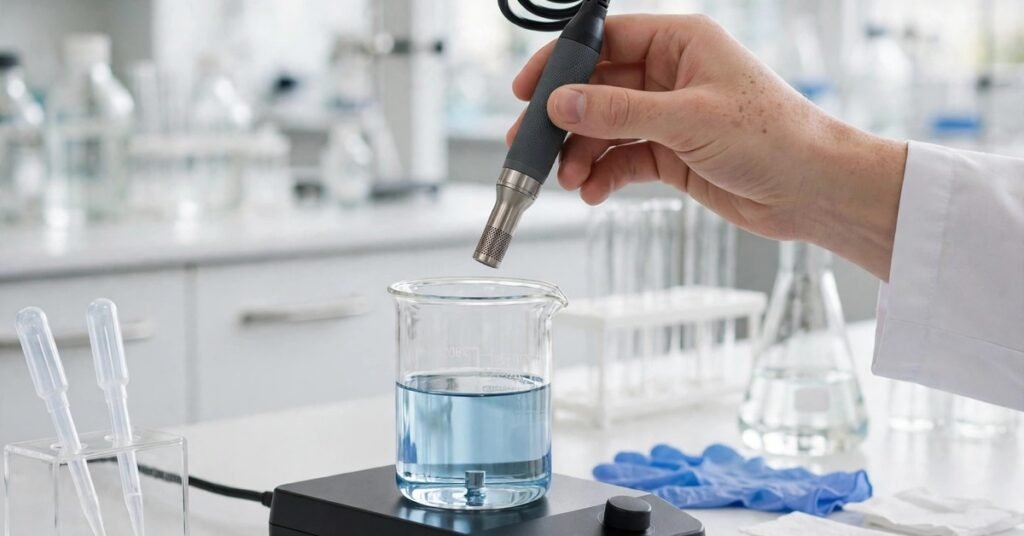
The closely related German word Messsonde combines the idea of measurement with that of a probe. Such equipment is used to investigate specific conditions and provide readings that can be interpreted by a measuring instrument or monitoring system.
For example, a temperature probe can detect changes in heat, while a pressure probe can help determine the pressure inside a particular environment. Both perform specialized measurement tasks, even though their construction and operating principles may differ.
The word Messonde also appears in modern online content as a coined concept associated with exploration, curiosity, creativity, and personal development. However, this interpretation does not have the same technical foundation as the German measurement terminology.
Understanding the context is therefore essential when determining what someone means by Messonde.
Origin and Background of Messonde
The technical background of Messonde is connected with measurement science and the development of sensing equipment.
Connection With German Technical Language
The established German spelling is Messsonde. It refers to a probe used for measurement or investigation. The term is associated with specialized instruments that help engineers, scientists, and technicians collect information about physical or chemical conditions.
The spelling Messonde may occur through typing mistakes, simplified transcription, translation, or unfamiliarity with German compound words.
Development of Measuring Probe Technology
Measuring instruments have developed significantly as scientific research and industrial processes have become more advanced.
Earlier measurement methods often depended on mechanical instruments and direct observation. Modern systems increasingly use electronic sensors, digital displays, automated recording, and computer-based analysis.
This development has made measuring probes important in environments where accurate and repeatable information is required.
Modern Online Interpretation
Outside technical terminology, Messonde has also been presented as a symbolic expression connected with personal exploration and human development.
Some online interpretations associate it with learning, resilience, curiosity, and discovering new opportunities. These are contemporary interpretations rather than established historical definitions.
Main Features of Messonde
When Messonde is understood in the context of measuring probes, its features depend on the particular instrument, sensor technology, and intended measurement task.
1. Accurate Measurement
One of the most important characteristics of a measuring probe is its ability to collect dependable readings. Accuracy is essential in scientific experiments, industrial production, and environmental monitoring.
The accuracy of a probe depends on its sensor quality, calibration, operating conditions, and measurement range.
2. Environmental Detection
Different probes are designed to detect different environmental conditions. These may include temperature, humidity, oxygen concentration, water quality, and other measurable properties.
This capability makes measuring probes useful in laboratories, manufacturing facilities, and outdoor research environments.
3. Real-Time Data Collection
Many modern electronic probes can provide measurements continuously or at regular intervals. Real-time readings allow operators to observe changing conditions and identify unusual variations.
For example, a monitoring system can use temperature measurements to identify overheating in industrial equipment.
4. Compatibility With Measurement Systems
A probe may work independently as part of a basic instrument or connect to a larger measurement system.
Depending on its design, it may use electrical connections, digital communication interfaces, or wireless technology to transfer measurement information.
5. Specialized Construction
Measuring probes are manufactured in different shapes, sizes, and materials. Some are designed for laboratory experiments, while others are built to withstand industrial temperatures, moisture, pressure, or chemical exposure.
Their construction determines where and how they can be used safely.
How Does Messonde Work?
The technical concept associated with Messonde follows the general operating principles of measuring probes.
Although different instruments use different technologies, their basic operation involves detecting a measurable property and converting that information into a useful reading.
Step 1: Contact With the Measurement Environment
The probe is positioned in or near the material, object, or environment being examined.
For example, a temperature probe may be placed inside a liquid, while an environmental probe may be positioned outdoors.
Step 2: Detection Through a Sensing Element
The sensing component responds to a particular physical or chemical condition.
A temperature sensor responds to changes in heat, whereas a pressure sensor detects variations in applied pressure.
Step 3: Signal Conversion
In electronic systems, the sensing element produces an electrical response associated with the measured condition.
The instrument processes this response and converts it into a readable measurement.
Step 4: Display and Data Recording
The resulting information may appear on a digital display, computer, monitoring device, or data-recording system.
Some advanced systems also store historical readings for later examination.
Step 5: Analysis and Interpretation
The collected information helps users understand the condition being measured. Depending on the application, the results may support maintenance decisions, scientific research, quality control, or environmental assessments.
Different Types of Measuring Probes Associated With Messonde
There is no single universal Messonde instrument. The related measuring-probe category includes several specialized devices.
Temperature Probes
Used to detect changes in temperature.
Temperature probes are commonly used in manufacturing, food processing, laboratories, heating systems, and scientific experiments.
They help users monitor heat levels and maintain appropriate operating conditions.
Pressure Probes
Pressure probes measure pressure in gases, liquids, or other environments.
They can support industrial monitoring, equipment testing, mechanical engineering, and fluid-system management.
Humidity Probes
Humidity probes measure the amount of moisture present in air or other environments.
They are useful in agricultural facilities, storage environments, climate-control systems, and weather monitoring.
Oxygen Probes
Oxygen probes detect oxygen concentration in a particular environment or sample.
They can be used in environmental research, water-quality monitoring, laboratory analysis, and industrial processes.
pH Measuring Probes
A pH probe measures how acidic or alkaline a liquid is.
These instruments are important in water treatment, agriculture, chemical laboratories, food production, and environmental testing.
CTD Measuring Probes
CTD instruments measure conductivity, temperature, and depth in aquatic environments.
They are particularly useful in oceanographic and marine research because these measurements help scientists examine water properties and understand underwater conditions.
Gas Detection Probes
Some specialized probes measure the concentration of particular gases.
They can help monitor industrial environments, detect unwanted gas accumulation, and support environmental safety assessments.
Important Applications of Messonde Technology
Measuring probes have a wide range of practical applications. Their usefulness comes from the ability to collect information that would otherwise be difficult to observe or measure consistently.
Industrial Manufacturing
Manufacturing facilities depend on accurate measurements to maintain production quality and equipment performance.
Temperature and pressure probes can monitor machinery, production processes, and operating environments.
They also help technicians identify unusual conditions before they develop into more serious equipment problems.
Scientific Research
Scientific research requires dependable information. Measuring probes allow researchers to collect data under controlled conditions and compare results across different experiments.
They can be used in physics, chemistry, biology, engineering, and environmental sciences.
Environmental Monitoring
Environmental researchers use specialized probes to examine air, water, soil, and other natural conditions.
For example, oxygen and pH measurements can help scientists evaluate water quality, while temperature measurements can support environmental studies.
Healthcare and Laboratories
Specialized measuring probes are also used in laboratory and medical equipment.
Depending on the instrument, they can assist with temperature monitoring, chemical analysis, and other measurement tasks. Medical applications require equipment specifically designed and validated for clinical use.
Agriculture
Agricultural operations benefit from soil and environmental monitoring.
Moisture and temperature sensors can help farmers understand growing conditions, manage irrigation, and monitor storage environments.
Building Management
Modern buildings use measurement devices to monitor indoor temperature, humidity, ventilation, and air quality.
This information can help building operators improve environmental control and maintain comfortable indoor conditions.
Benefits and Importance of Messonde
The importance of measuring-probe technology can be understood through several practical advantages.
Better Decision-Making
Reliable measurements provide useful information for technical and operational decisions. Instead of relying entirely on assumptions, users can evaluate actual readings.
Improved Efficiency
Automated measurement systems can reduce the need for repeated manual checks. This can save time and make routine monitoring more convenient.
Early Detection of Problems
Continuous monitoring can help identify abnormal changes in temperature, pressure, or other conditions.
Early detection may allow operators to investigate problems before they become more expensive or disruptive.
Consistent Monitoring
Using appropriate measurement equipment helps organizations monitor conditions according to established procedures.
This is particularly important in industries where consistent operating conditions and product quality are necessary.
Support for Scientific Progress
Accurate measurement is fundamental to research. Measuring probes help scientists collect observations, test hypotheses, and develop a better understanding of natural and industrial systems.
Limitations and Challenges
Although measuring probes offer important benefits, they also have limitations that users should understand.
Calibration Requirements
Measurement instruments may become inaccurate over time or under certain operating conditions. Regular calibration helps maintain dependable readings.
Environmental Sensitivity
Extreme temperatures, moisture, chemicals, vibration, and physical damage can affect probe performance.
Users should select equipment designed for the intended environment.
Maintenance Needs
Some probes require cleaning, inspection, replacement, or periodic servicing.
Poor maintenance can affect measurement quality and shorten equipment life.
Measurement Range
Every probe has a specified operating range. Using equipment outside that range can produce unreliable readings or damage the instrument.
Installation and Positioning
Incorrect placement can lead to misleading measurements. A probe must be installed according to its technical requirements and the conditions being investigated.
Messonde vs. Sensor: Understanding the Difference
The terms sensor and measuring probe are related, but they are not always interchangeable.
A sensor is generally the component that detects a physical or chemical property. A measuring probe may be a complete assembly containing the sensing element along with protective housing, connecting cables, electronics, and other components.
For example, a temperature sensor may be installed inside a metal probe that protects it and allows it to be positioned in a liquid or industrial environment.
Understanding this distinction helps users select suitable measurement equipment.
Messonde and Modern Technology
Modern measurement technology has become increasingly connected with digital systems.
Many contemporary instruments combine traditional sensing principles with electronic processing, automated data collection, and computer-based monitoring.
Digital Measurement
Digital instruments can convert sensor signals into numerical readings that are easier to display, compare, and record.
Automated Monitoring
Automated monitoring systems can collect measurements at predefined intervals without requiring constant manual observation.
Data Analysis
Recorded measurements can be examined to identify patterns, unusual changes, and relationships between different variables.
Connected Equipment
Some advanced measurement devices support communication with larger industrial or environmental monitoring systems. The available connectivity depends on the specific manufacturer and product model.
It is important to distinguish these general developments from claims about a particular product called Messonde. There is no verified universal Messonde product specification or official feature list established by the available information.
Is Messonde a Digital Platform or a Personal Development Concept?
The name also appears in online articles that describe it as a modern concept associated with exploration, self-discovery, creativity, and personal growth.
Under this interpretation, Messonde represents the willingness to learn, investigate unfamiliar ideas, and move beyond familiar experiences.
For example, someone learning a new skill, starting a creative project, or exploring a different career direction might use the word symbolically to describe that experience.
However, this interpretation should not be presented as an established philosophy, historical movement, or academically recognized framework.
Similarly, descriptions of Messonde as a communication platform, productivity application, or software service require independent verification. No widely recognized commercial software product with a confirmed developer and established technical documentation can be identified from the available evidence.
Keeping these interpretations separate makes information about Messonde more accurate and understandable.
How to Identify the Correct Meaning of Messonde
Because the keyword has multiple online interpretations, the surrounding context can help determine its intended meaning.
Consider the following points:
- Check the subject: If the word appears in engineering or scientific material, investigate the related term Messsonde.
- Examine the description: References to probes, sensors, temperature, pressure, or measurement suggest a technical context.
- Check the website: If Messonde appears as a company or product name, look for official documentation and identifiable ownership.
- Evaluate conceptual claims: Treat descriptions involving personal growth or exploration as interpretations unless a reliable historical or academic source supports them.
- Verify technical specifications: Look for the manufacturer’s model information, measurement range, calibration requirements, and operating instructions.
These steps help prevent confusion between a genuine technical instrument, a modern coined expression, and an unverified commercial claim.
Latest Information and Current Understanding of Messonde
As of November 2026, the most reliable technical interpretation remains its association with the German term Messsonde.
Established terminology resources translate Messsonde as a measuring probe, test probe, or measuring sensor. A government-maintained marine terminology database also recognizes measuring probes as a technical category, including CTD probes, pH meters, and oxygen probes.
There is no confirmed evidence establishing Messonde as a separate standardized technology, a specific commercial product, or a widely recognized software platform.
The broader field of measuring technology continues to develop through improvements in electronic sensors, digital monitoring, automated data collection, and measurement accuracy. These developments provide relevant context but should not be mistaken for specific announcements or updates about a product named Messonde.
Frequently Asked Questions About Messonde
1. What does Messonde mean?
Messonde is an ambiguous term commonly associated with Messsonde, a German technical word meaning measuring probe or sensing probe.
2. Is Messonde a real technical term?
The exact spelling is not the standard German technical spelling. Messsonde is the established form used for measuring probes.
3. What is the main purpose of Messonde?
In its technical interpretation, its purpose is associated with collecting measurements and detecting specific physical or chemical conditions.
4. What can a measuring probe measure?
Depending on its design, a measuring probe can measure temperature, pressure, humidity, oxygen concentration, conductivity, pH, and other properties.
5. Where is Messonde technology used?
Related measuring-probe technology is used in industrial manufacturing, scientific research, environmental monitoring, laboratories, agriculture, and building management.
6. Is Messonde the same as a sensor?
Not exactly. A sensor is generally the component that detects a particular condition, whereas a measuring probe can include the sensor and additional protective or electronic components.
7. Does Messonde have an official website?
The name is used by an online website, but that does not establish it as an official manufacturer or provider of measuring equipment.
8. Is Messonde a software application?
There is insufficient verified information to identify a widely recognized software application officially named Messonde.
9. Is Messonde associated with personal development?
Some online interpretations connect the term with curiosity, exploration, resilience, and personal growth. These are modern conceptual interpretations rather than established historical meanings.
10. What is the difference between Messonde and Messsonde?
Messsonde is the established German spelling for a measuring probe. Messonde is an alternative spelling that may result from typing, transcription, or translation differences.
11. Why are measuring probes important?
They provide useful measurements that support scientific research, industrial monitoring, environmental assessment, and quality control.
12. How can someone identify a suitable measuring probe?
The user should consider the measurement type, required accuracy, operating range, environmental conditions, compatibility, and calibration requirements.




4 Comments