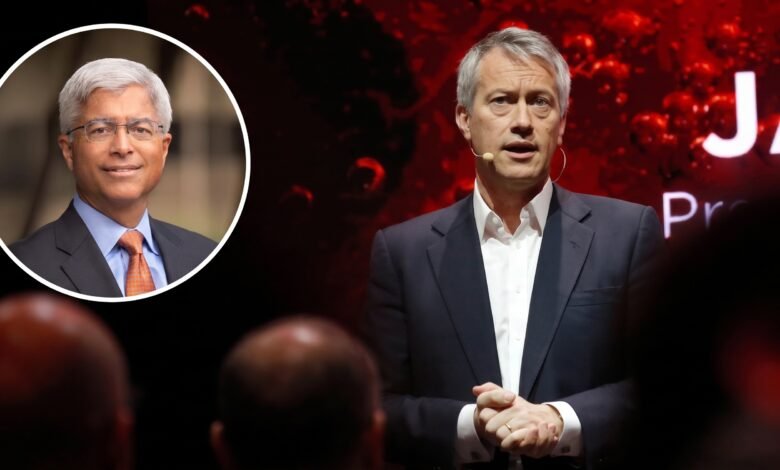
Pedro Pizarro and James Quincey are two influential business executives who have built distinguished careers in major international industries. Pedro Pizarro is recognized for his leadership in the American energy sector, particularly through his work at Edison International. James Quincey is widely known for leading The Coca-Cola Company, one of the world’s most recognizable beverage businesses.
Although their professional backgrounds are different, both executives have played important roles in managing large organizations, developing business strategies, responding to changing markets, and guiding companies through periods of transformation.
Their careers provide interesting examples of corporate leadership, strategic planning, innovation, and the responsibilities associated with managing major publicly traded companies.
Quick Information Table
| Category | Pedro Pizarro | James Quincey |
|---|---|---|
| Full name | Pedro J. Pizarro | James Quincey |
| Nationality | American | British |
| Profession | Business executive | Business executive |
| Main organization | Edison International | The Coca-Cola Company |
| Current position (2026) | President and CEO | Executive Chairman |
| Industry | Energy and electricity | Food and beverages |
| Education | Harvard University; California Institute of Technology | University of Liverpool |
| Academic background | Chemistry | Electronic engineering |
| Leadership began | Edison International CEO in 2016 | Coca-Cola CEO in 2017 |
| Previous experience | McKinsey & Company, Edison Mission Energy, Southern California Edison | Strategy consulting and international Coca-Cola operations |
| Major business focus | Electricity infrastructure, energy reliability, sustainability | Beverage innovation, brand development, international growth |
| Notable achievement | Leading a major American electric utility holding company | Transforming Coca-Cola into a broader total-beverage business |
1. Who Are Pedro Pizarro and James Quincey?
Pedro Pizarro and James Quincey are internationally recognized executives who lead businesses in two important areas of the global economy.
Pedro J. Pizarro is the president and chief executive officer of Edison International, a major American energy company. The organization is the parent company of Southern California Edison, which supplies electricity to millions of customers. His responsibilities include corporate strategy, energy infrastructure, operational performance, business resilience, and the long-term development of the electricity sector.
James Quincey is a British business executive who became widely recognized through his leadership at The Coca-Cola Company. He joined the company in 1996 and advanced through several international management positions before becoming CEO in 2017. In 2026, he transitioned from CEO to executive chairman.
Both executives have developed their careers through extensive professional experience and international business exposure. However, their industries require different types of expertise. Pizarro operates in an environment shaped by electricity demand, infrastructure investment, public regulation, and environmental considerations. Quincey’s career has focused on consumer products, international marketing, brand development, and global distribution.
Their professional stories provide useful examples of how leadership works in different corporate environments.
2. Pedro Pizarro: Background and Education
Pedro J. Pizarro has an academic background in chemistry and extensive experience in corporate strategy, energy management, and executive leadership.
His educational achievements include a bachelor’s degree in chemistry from Harvard University and a Ph.D. in chemistry from the California Institute of Technology, commonly known as Caltech.
His academic qualifications reflect a strong foundation in scientific research, analytical thinking, and technical problem-solving.
Pizarro also received graduate fellowships from the National Science Foundation and the Department of Defense. These opportunities supported his advanced academic development and research experience.
Although his education was primarily scientific, his professional career eventually moved toward corporate management and the energy industry.
Early Professional Experience
Before joining Edison International, Pizarro worked at McKinsey & Company in Los Angeles.
He served as a senior engagement manager, providing management consulting services to clients in energy, technology, engineering services, and banking.
His responsibilities included:
- Developing corporate strategies.
- Supporting mergers and acquisitions.
- Improving organizational performance.
- Evaluating business operations.
- Advising companies on management and strategic decisions.
This experience provided a foundation for understanding complex businesses and managing important organizational challenges.
His combination of scientific education and management consulting experience later became valuable in the energy sector.
3. Pedro Pizarro’s Career at Edison International
Pedro Pizarro joined Edison International in 1999 as director of strategic planning.
His career developed through several positions involving technology, business development, power procurement, and energy operations.
Early Leadership Positions
In 2000, he became vice president of technology business development.
In 2001, he moved to Southern California Edison, where he became involved in strategy and business development.
He subsequently held positions involving power procurement and electricity operations.
In 2008, he became executive vice president of power operations. This position involved overseeing important operational areas, including electricity transmission and distribution, power generation, and energy procurement.
These responsibilities helped him develop a comprehensive understanding of the electricity business.
Leadership at Edison Mission Energy
Between 2011 and 2014, Pizarro served as president of Edison Mission Energy and chaired its board of directors.
Edison Mission Energy operated as an independent power producer, with activities involving electricity generation, power facilities, and energy trading.
The company experienced significant financial difficulties and filed for bankruptcy protection in 2012.
Its principal assets were subsequently sold to NRG Energy in 2014.
This period represented an important chapter in Pizarro’s executive experience, involving corporate restructuring and complex business challenges.
Becoming President and CEO
Pizarro became president of Southern California Edison in October 2014.
In May 2016, he was elected president of Edison International. He subsequently became its chief executive officer in October 2016.
As CEO, he assumed responsibility for guiding the parent organization and overseeing its broader business strategy.
His leadership has focused on electricity infrastructure, customer service, operational reliability, financial management, and energy transformation.Edison International+2
4. Edison International and Pedro Pizarro’s Business Responsibilities
Edison International is an important organization in the American energy industry.
Its principal subsidiary, Southern California Edison, is one of the country’s largest electric utilities.
The company’s business environment includes electricity generation procurement, power distribution, infrastructure investment, grid modernization, and customer service.
Electricity Infrastructure
Electricity infrastructure is essential for homes, businesses, transportation, healthcare facilities, and industrial operations.
Pizarro’s leadership responsibilities include supporting investments in the infrastructure required to deliver reliable electricity.
This involves maintaining transmission and distribution networks, improving operational systems, and preparing the grid for changing energy requirements.
Clean Energy and Sustainability
The electricity industry is experiencing a significant transition toward cleaner energy sources.
Solar power, wind energy, battery storage, electric vehicles, and energy efficiency are changing the way electricity is generated and consumed.
Pizarro’s responsibilities include helping the organization respond to these developments while balancing reliability, affordability, and environmental objectives.
Grid Modernization
Modern electricity networks require advanced technology to manage changing demand and improve operational performance.
Grid modernization can involve:
- Advanced electricity meters.
- Improved transmission infrastructure.
- Battery storage integration.
- Digital monitoring systems.
- Cybersecurity improvements.
- More efficient electricity distribution.
These investments are important because electricity demand is changing as transportation, buildings, and industrial processes become increasingly electrified.
Business Resilience and Risk Management
Energy companies must prepare for extreme weather, equipment failures, cyber threats, and other emergencies.
Pizarro has participated in industry-level initiatives focused on strengthening electricity infrastructure and coordinating responses to major threats.
His involvement in the Electricity Subsector Coordinating Council reflects the importance of cooperation between government authorities and the electric power industry.Edison International+1
5. Pedro Pizarro’s Board Memberships and Industry Recognition
In addition to managing Edison International, Pizarro has participated in several important corporate and industry organizations.
He serves on the board of 3M, a multinational company with interests in industrial technology, safety, healthcare, and related markets.
He has also served in leadership positions at the Edison Electric Institute, an organization representing investor-owned electric companies.
His other professional responsibilities have included participation in the Electricity Subsector Coordinating Council.
These roles provide opportunities to contribute to discussions involving energy infrastructure, corporate governance, business resilience, and national security.
His previous academic and professional connections also include Caltech, where he has served as a trustee.
His background demonstrates how senior executives can contribute to different industries through corporate boards and professional associations.Edison International+1
6. James Quincey: Background and Early Life
James Quincey is a British business executive best known for his leadership at The Coca-Cola Company.
He was born in the United Kingdom and developed an academic interest in engineering before moving into international business management.
He earned a bachelor’s degree in electronic engineering from the University of Liverpool.
His engineering education provided a technical foundation in analytical reasoning, systems, and problem-solving.
However, his career eventually developed in the areas of strategy consulting, business operations, consumer products, and international corporate management.
Early Career in Consulting
Before joining Coca-Cola, Quincey worked as a partner in strategy consulting at The Kalchas Group.
The organization was a consulting business associated with experience from Bain & Company and McKinsey.
His consulting experience helped him understand business strategy, organizational development, market opportunities, and corporate decision-making.
This background prepared him for a career involving international management and large-scale business operations.
Joining The Coca-Cola Company
Quincey joined Coca-Cola in Atlanta in 1996.
His initial position was director of learning strategy for the Latin America Group.
He subsequently advanced through a series of operational and management positions.
His early assignments gave him exposure to international markets and the challenges of managing consumer products across different countries.
His ability to work across different markets became an important part of his professional development.The Coca-Cola Company+1
7. James Quincey’s Career Growth at Coca-Cola
James Quincey’s rise through Coca-Cola represents a long period of international corporate experience.
Rather than becoming CEO immediately, he developed his career through regional leadership responsibilities and increasingly important management positions.
Leadership in Latin America
In 2003, Quincey became president of the South Latin division.
He later became president of the Mexico division in 2005, a position he held until 2008.
During this period, he gained experience in managing regional operations, understanding consumer preferences, and developing strategies for different markets.
One notable development was his involvement in the acquisition of Jugos del Valle, a beverage business that strengthened Coca-Cola’s position in the Mexican juice market.
Leadership in Europe
From 2008 to 2012, Quincey served as president of the Northwest Europe and Nordics business unit.
His responsibilities included managing regional operations and supporting the company’s beverage portfolio.
During this period, he was involved in the acquisition of innocent, a British-based juice and smoothie business, in 2009.
In 2013, he became president of Coca-Cola’s Europe Group.
Under his leadership, the region worked to strengthen its brand portfolio and improve market share.
He also played an important role in the creation of Coca-Cola European Partners, a major independent Coca-Cola bottling organization.
Becoming President and COO
In August 2015, Quincey became president and chief operating officer of Coca-Cola.
These positions placed him in a central role within the company’s global management structure.
He was responsible for supporting operational performance, coordinating international business activities, and helping guide the company’s strategic direction.
His experience across Latin America and Europe provided valuable insight into different consumer markets.
Becoming CEO in 2017
In May 2017, James Quincey became chief executive officer of The Coca-Cola Company.
This appointment represented the culmination of more than two decades of professional development within the organization.
He became chairman of the board in 2019, giving him responsibility for both executive leadership and board-level corporate governance.
His tenure as CEO lasted until March 31, 2026.The Coca-Cola Company+2
8. James Quincey’s Leadership and Business Strategy
James Quincey’s leadership was associated with a major strategic transformation at Coca-Cola.
Historically, the company was strongly associated with its flagship carbonated soft drinks. However, changing consumer preferences, health awareness, competition, and new beverage categories created opportunities and challenges.
Quincey supported the development of Coca-Cola as a broader total-beverage company.
Transforming Coca-Cola into a Total Beverage Business
One of his major priorities was expanding the company’s portfolio beyond traditional soft drinks.
The strategy involved developing and promoting products in several categories, including:
- Sparkling soft drinks.
- Bottled water.
- Sports drinks.
- Juices and juice-based beverages.
- Coffee.
- Tea.
- Dairy-based beverages.
- Low-sugar and no-sugar alternatives.
This approach allowed Coca-Cola to serve consumers with different tastes and purchasing preferences.
It also helped the organization respond to growing interest in product variety and changing consumption habits.
Brand Development and Marketing
Coca-Cola’s global success depends heavily on brand recognition, marketing, and distribution.
During Quincey’s leadership, the company continued investing in established brands while developing additional billion-dollar brands.
According to the company’s leadership transition announcement, Coca-Cola added more than ten additional billion-dollar brands during his CEO tenure.
His strategy also emphasized modern marketing methods, digital communication, and stronger relationships with consumers.
Digital Transformation
Digital technology became increasingly important during his leadership.
Coca-Cola worked to modernize its marketing activities, improve data-driven decision-making, and develop more efficient business operations.
The company also explored artificial intelligence and other emerging technologies to support marketing, product development, and commercial activities.
These developments reflected the growing importance of technology in the global consumer goods industry.
International Business Expansion
Coca-Cola operates across more than 200 countries and territories.
Managing such a large international business requires an understanding of regional consumer behavior, local regulations, distribution networks, and cultural differences.
Quincey’s experience in Latin America and Europe helped him understand the importance of adapting business strategies to individual markets.
His leadership emphasized global brand consistency while allowing regional operations to respond to local requirements.The Coca-Cola Company+2
9. James Quincey’s Transition from CEO to Executive Chairman
One of the most important developments in James Quincey’s professional career occurred in 2026.
After approximately nine years as Coca-Cola’s chief executive officer, the company announced a planned leadership transition in December 2025.
The board selected Henrique Braun, who previously served as executive vice president and chief operating officer, to become the company’s next CEO.
The transition became effective on March 31, 2026.
Why the Leadership Change Was Important
Leadership succession is an important part of corporate governance.
Major companies must prepare for changes in executive responsibilities to maintain business continuity and protect long-term strategic objectives.
Quincey’s transition represented a planned succession rather than an unexpected departure.
The company selected an experienced internal executive who understood its international operations and business structure.
James Quincey’s New Responsibilities
Following the transition, Quincey became executive chairman of The Coca-Cola Company.
His role shifted from managing daily executive operations to providing board-level leadership and strategic oversight.
The executive chairman position allows him to contribute his experience and institutional knowledge while the new CEO assumes responsibility for managing the company’s operations.
This transition marked the end of one important stage of his career while maintaining his connection to Coca-Cola’s long-term direction.
Henrique Braun’s Role
Henrique Braun became CEO on March 31, 2026.
He previously held senior management positions across several international markets and served as Coca-Cola’s chief operating officer.
His appointment reflected the company’s preference for leadership continuity and internal executive development.
As of November 2026, James Quincey is executive chairman, while Henrique Braun is the company’s CEO.The Coca-Cola Company+3
10. Pedro Pizarro and Edison International: Recent Developments
Pedro Pizarro’s leadership has taken place during a period of significant change in the American electricity industry.
Electric utilities are dealing with growing electricity demand, infrastructure modernization, climate-related risks, and increased expectations concerning reliability and customer protection.
Wildfire Risk and Utility Responsibility
One of the most significant challenges facing Southern California Edison has involved wildfire risk.
In January 2025, the Eaton Fire devastated communities in the Los Angeles area.
Southern California Edison’s equipment was identified as the likely source of ignition, making the incident an important issue for the company’s operations, public reputation, and legal responsibilities.
Pizarro has led the company’s response, including the establishment of a wildfire victim compensation fund.
The incident highlighted the importance of infrastructure maintenance, equipment safety, risk management, and emergency preparation.
It also brought increased attention to the financial and regulatory responsibilities of electric utilities operating in wildfire-prone regions.
Energy Demand and Infrastructure Investment
Another major challenge is the increasing demand for electricity.
Electric vehicles, data centers, industrial facilities, and electrified buildings are changing consumption patterns.
Utilities must invest in infrastructure capable of supporting these developments.
Pizarro’s leadership responsibilities include preparing Edison International for these changes while maintaining reliable service for existing customers.
Leadership Status in 2026
According to the company’s 2026 reporting, Pizarro continues to serve as president and CEO of Edison International.
His responsibilities remain closely connected to energy reliability, corporate strategy, infrastructure development, and the company’s response to major operational challenges.Los Angeles Business Journal+3
11. Pedro Pizarro and James Quincey: Key Differences
Although Pedro Pizarro and James Quincey are both senior corporate leaders, their careers represent different industries and management priorities.
| Comparison | Pedro Pizarro | James Quincey |
|---|---|---|
| Main company | Edison International | The Coca-Cola Company |
| Industry | Energy and electricity | Beverages and consumer goods |
| Current position | President and CEO | Executive Chairman |
| Academic background | Chemistry | Electronic engineering |
| University | Harvard and Caltech | University of Liverpool |
| Career beginning | Management consulting and energy | Strategy consulting and Coca-Cola operations |
| CEO appointment | 2016 | 2017 |
| Main responsibilities | Energy infrastructure and utility operations | Corporate strategy and board leadership |
| Major business challenge | Reliability, infrastructure, wildfire risk | Consumer preferences, competition, brand growth |
| Geographic business focus | Primarily the United States | Global markets |
Differences in Management Approaches
Pizarro’s leadership requires a strong understanding of infrastructure, engineering, energy markets, and public regulation.
Electricity companies operate in a highly regulated environment where reliability and safety are essential.
Quincey’s career has involved a different set of priorities.
The beverage industry is strongly influenced by consumer preferences, brand identity, pricing, distribution, and competition.
His leadership required balancing established global brands with changing consumer expectations and new product categories.
Similarities in Their Professional Journeys
Despite their differences, several important qualities connect their careers.
1. Strong educational foundations
Both executives have university degrees in technical disciplines. Pizarro studied chemistry, while Quincey studied electronic engineering.
2. International business experience
Both have worked in organizations with international business relationships and complex operating environments.
3. Strategic decision-making
Their positions require decisions involving long-term investments, business risks, and organizational development.
4. Organizational leadership
Both have managed large organizations with extensive workforces, significant financial responsibilities, and important stakeholder relationships.
5. Adaptability
Their careers demonstrate the importance of adjusting business strategies to changing technology, markets, and economic conditions.
12. What Makes Pedro Pizarro and James Quincey Influential?
The professional influence of Pedro Pizarro and James Quincey comes from their responsibilities within organizations that affect millions of people.
Edison International operates in an industry essential to modern infrastructure. Electricity supports homes, hospitals, manufacturing, transportation, communications, and economic activity.
Coca-Cola operates in a consumer industry with global brand recognition and extensive distribution networks.
Both organizations face major challenges that require careful leadership.
For Pizarro, these include electricity reliability, infrastructure investment, environmental considerations, and public safety.
For Quincey, they have included international competition, beverage innovation, marketing transformation, and changing consumer preferences.
Their careers demonstrate that effective leadership requires more than managing daily business operations. It also requires understanding industry developments, preparing for future risks, and building strategies that support long-term organizational performance.
13. Business Lessons from Their Careers
The professional journeys of Pedro Pizarro and James Quincey provide useful lessons for entrepreneurs, students, investors, and future corporate executives.
Education Can Open Different Career Paths
Both executives began with technical academic backgrounds but developed careers in business leadership.
Their experiences demonstrate that professional development does not always need to follow a single academic direction.
Technical knowledge can be valuable in corporate management, particularly when combined with communication, financial understanding, and strategic thinking.
Experience Matters in Executive Leadership
Neither executive reached a senior position without gaining extensive professional experience.
Pizarro advanced through management consulting and several leadership positions in the energy industry.
Quincey developed his career through regional operations and international executive responsibilities.
Their stories highlight the value of learning from different business environments.
Adaptation Is Essential
Companies must respond to changing markets, consumer expectations, technology, and economic conditions.
Pizarro’s industry is adapting to new electricity demands and infrastructure requirements.
Quincey’s leadership at Coca-Cola emphasized the development of a wider beverage portfolio and modern marketing practices.
Long-Term Planning Supports Business Stability
Large organizations require strategies that consider future opportunities and risks.
Investing in infrastructure, improving operational performance, developing new products, and strengthening leadership teams are important parts of long-term corporate planning.
These principles are relevant to businesses of different sizes and industries.
14. The Lasting Professional Legacy of Pedro Pizarro and James Quincey
Pedro Pizarro and James Quincey represent two different but equally interesting examples of corporate leadership.
Pizarro’s career demonstrates how scientific education, consulting experience, and long-term involvement in the energy industry can lead to senior executive responsibilities. His work at Edison International places him in an important position within the American electricity sector.
Quincey’s professional journey demonstrates the value of international management experience, strategic planning, and understanding consumer markets. His leadership helped Coca-Cola expand its beverage portfolio and modernize its business strategy.
Their careers also highlight the importance of preparing organizations for future challenges. Energy companies must strengthen infrastructure and improve reliability, while consumer businesses must continue adapting to new preferences and competitive conditions.
Together, their experiences offer valuable perspectives on corporate management, business transformation, and the responsibilities of leading major international organizations.
Frequently Asked Questions (FAQs)
1. Who is Pedro Pizarro?
Pedro J. Pizarro is an American business executive and the president and CEO of Edison International, the parent company of Southern California Edison.
2. Who is James Quincey?
James Quincey is a British business executive who previously served as CEO of The Coca-Cola Company. He became executive chairman in March 2026.
3. Are Pedro Pizarro and James Quincey connected?
Both are influential corporate executives, but they work in different industries. There is no established public information indicating that they are relatives or business partners.
4. What is Pedro Pizarro’s educational background?
He earned a bachelor’s degree in chemistry from Harvard University and a Ph.D. in chemistry from the California Institute of Technology.
5. What is James Quincey’s educational background?
James Quincey earned a bachelor’s degree in electronic engineering from the University of Liverpool in the United Kingdom.
6. When did Pedro Pizarro become CEO?
Pedro Pizarro became president and CEO of Edison International in October 2016.
7. When did James Quincey become CEO of Coca-Cola?
James Quincey became CEO of The Coca-Cola Company in May 2017 and served in that position until March 31, 2026.
8. Who replaced James Quincey as Coca-Cola CEO?
Henrique Braun succeeded James Quincey as CEO on March 31, 2026. Quincey transitioned to executive chairman.
9. What is Edison International known for?
Edison International is primarily known for its involvement in the energy industry through Southern California Edison, which provides electricity services to customers in Southern California.
10. What were James Quincey’s major achievements at Coca-Cola?
His major achievements include expanding Coca-Cola’s beverage portfolio, strengthening its international operations, modernizing marketing activities, and supporting its transformation into a total-beverage company.
11. What are Pedro Pizarro’s main business responsibilities?
His responsibilities include corporate strategy, electricity infrastructure, operational reliability, energy procurement, business resilience, and long-term organizational development.
12. What can business professionals learn from their careers?
Their careers demonstrate the importance of education, professional experience, strategic thinking, adaptability, innovation, and long-term planning.
FuturesBiref.co.uk