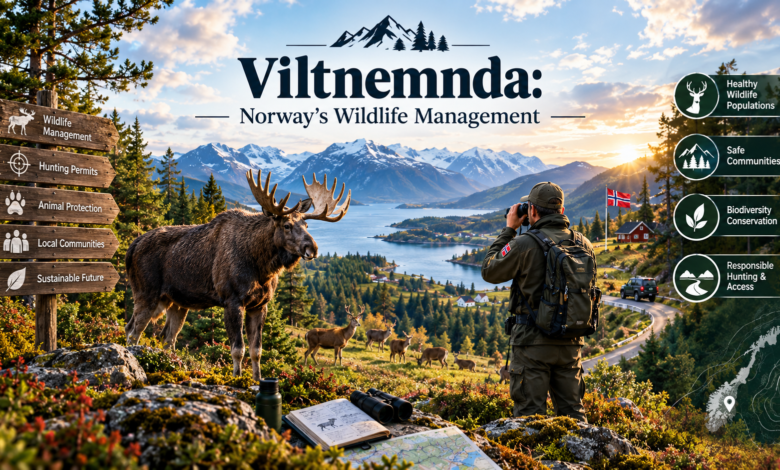
Viltnemnda: Understanding Norway’s Wildlife Management System
Introduction
Wildlife management plays an essential role in maintaining ecological balance, protecting biodiversity, and reducing conflicts between humans and animals. In Norway, a country known for its extensive forests, mountainous landscapes, and diverse wildlife, local authorities have developed systems to address the practical challenges associated with living alongside wild animals. One important part of this framework is viltnemnda, a Norwegian term associated with municipal wildlife management committees.
The concept of viltnemnda reflects the relationship between local communities, environmental responsibility, and the sustainable management of wildlife populations. From responding to injured animals to addressing collisions involving wildlife and vehicles, these committees have historically contributed to the practical administration of wildlife-related matters at the local level.
Understanding viltnemnda requires more than simply translating the Norwegian word. It involves exploring the country’s wildlife traditions, municipal responsibilities, environmental legislation, and the challenges that arise when human activities overlap with natural habitats.
Also read: Lucipara Biography: Background, Career and Key Facts
Whether someone is researching Norwegian public administration, wildlife conservation, or the country’s approach to environmental protection, learning about viltnemnda provides valuable insight into how local knowledge can support broader conservation objectives.
What Is Viltnemnda?
Viltnemnda is a Norwegian term commonly used for a municipal wildlife committee. The word combines the Norwegian term for game or wild animals, vilt, with nemnda, meaning a committee or board.
Historically, viltnemnda referred to a local body involved in administering wildlife-related responsibilities within a municipality. Its work could include matters involving hunting, game management, wildlife incidents, and cooperation between landowners, hunters, and public authorities.
The precise responsibilities associated with viltnemnda have varied according to the applicable legislation, municipal arrangements, and changes in public administration. Consequently, the term should not automatically be understood as describing an identical organization with identical powers in every Norwegian municipality.
In contemporary Norway, municipal wildlife responsibilities are generally organized through local administrative arrangements, elected bodies, and designated personnel. The Norwegian Environment Agency, county authorities, and municipal administrations each have roles within the wider wildlife management framework.
For this reason, viltnemnda is best understood in its historical and local administrative context rather than as the name of one national wildlife agency.
The Historical Background of Viltnemnda
Norway has a long tradition of managing wildlife as both a natural resource and an important component of rural life. Hunting, farming, forestry, and animal husbandry have historically shaped relationships between Norwegian communities and the surrounding environment.
Wild animals can provide ecological benefits while also creating practical difficulties. Deer may damage agricultural crops, moose can cause dangerous road collisions, and large predators may occasionally threaten livestock. These situations require decisions that consider environmental protection alongside the needs of local residents.
As public administration developed, wildlife management became increasingly connected to formal regulations, conservation objectives, and municipal responsibilities.
Local wildlife committees emerged within this broader tradition of community-based administration. Their purpose was to help address wildlife matters using knowledge of local landscapes, animal populations, and human activities.
The historical importance of viltnemnda lies partly in its connection to local decision-making. Residents and officials familiar with regional conditions could help identify problems, coordinate responses, and communicate with the relevant authorities.
Over time, however, Norway’s environmental legislation and administrative structures evolved. Responsibilities that were once associated with traditional wildlife committees may now be handled by municipal officials, specialist personnel, or other designated bodies.
This evolution illustrates a broader principle of public administration: institutions must adapt as scientific knowledge, legal requirements, and environmental priorities change.
The Main Responsibilities Associated With Viltnemnda
The work historically connected with viltnemnda covered several areas of practical wildlife management. Although specific duties depend on the relevant legal and administrative arrangements, the following subjects help explain the committee’s traditional role.
1. Managing Local Wildlife Populations
Wildlife populations must be managed with consideration for ecological sustainability, habitat quality, and the long-term health of animal species.
In Norway, species such as moose, red deer, roe deer, and wild reindeer are important subjects of game management. Population levels can influence vegetation, agricultural activity, traffic safety, and the condition of natural habitats.
Local wildlife management involves assessing animal populations, reviewing available information, and coordinating decisions within the established regulatory framework.
Viltnemnda has historically been associated with this local dimension of wildlife administration. However, formal decisions about hunting quotas and population management depend on the applicable legislation and the authorities responsible for each species and area.
2. Responding to Injured Wildlife
Injured animals can create urgent situations, particularly when they are found near roads, residential areas, or places frequently visited by the public.
Traffic collisions involving moose and deer are a significant wildlife management concern in Norway. An animal may survive an initial collision but suffer injuries that are not immediately visible. It may also move away from the road, making its location difficult to determine.
Local wildlife personnel may be contacted to assess these incidents and coordinate an appropriate response. Depending on the circumstances, the response may involve tracking an injured animal, evaluating its condition, or arranging humane euthanasia when legally justified.
Historically, local wildlife committees have been associated with coordinating or supporting such activities.
It is important to distinguish the historical role of viltnemnda from the responsibilities of current municipal wildlife personnel. The precise reporting procedure and the officials responsible for an incident depend on local arrangements.
3. Reducing Wildlife-Related Traffic Accidents
Wildlife collisions can threaten motorists, passengers, animals, and emergency responders. Moose are particularly concerning because of their size and the potential severity of collisions.
Preventing these incidents requires cooperation among road authorities, municipalities, wildlife specialists, and the public.
Measures may include warning signs, wildlife crossings, fencing in selected locations, habitat management, and the analysis of accident patterns.
Local wildlife administration can also contribute by helping authorities understand where collisions occur and how incidents affect animal populations.
The knowledge developed through these activities can inform future planning and improve communication between residents and public agencies.
4. Supporting Hunting and Game Management
Hunting is an established part of Norwegian rural culture and wildlife administration. It can also serve as a population management tool when conducted under appropriate legal requirements.
Sustainable hunting requires reliable information about animal populations, reproduction, habitat conditions, and the ecological consequences of harvesting wildlife.
Local knowledge is particularly valuable because wildlife populations and environmental conditions differ between municipalities.
Viltnemnda has historically been associated with local game management, including administrative matters connected with hunting and wildlife populations. Nevertheless, hunting permissions, quotas, reporting obligations, and other regulatory decisions must be understood in relation to current Norwegian law.
5. Addressing Human-Wildlife Conflicts
Human-wildlife conflict occurs when animals and people compete for space or resources, or when wildlife causes damage to property, crops, or livestock.
In agricultural areas, deer may feed on crops, while predators can occasionally threaten domesticated animals. In residential areas, encounters with wild animals may raise concerns about safety or animal welfare.
Effective management requires proportionate responses based on evidence rather than assumptions about wildlife.
Local wildlife administration can help residents understand the available procedures, report relevant incidents, and identify the authorities responsible for particular problems.
The approach associated with viltnemnda reflects the importance of connecting local concerns with the wider legal framework for wildlife protection and management.
How Viltnemnda Fits Into Norway’s Wildlife Administration
Norway’s wildlife management system includes several levels of government and a range of specialized responsibilities. Understanding these relationships helps clarify the position of viltnemnda.
Municipal Authorities
Municipalities are important participants in Norwegian environmental administration. Their responsibilities can include designated wildlife management tasks, local planning, and coordination of certain wildlife-related responses.
The organization of these responsibilities differs between municipalities. Some functions may be handled by municipal employees, while others may involve designated wildlife personnel or cooperation with neighboring municipalities.
Consequently, someone seeking assistance with a wildlife incident should consult the relevant municipality’s current information rather than assume that a separate committee operates everywhere.
County Authorities
County-level authorities have responsibilities within Norway’s wider environmental and wildlife management framework. Depending on the issue and the applicable regulations, they may provide guidance, coordinate regional matters, or exercise specific statutory powers.
Their work helps connect local administration with national conservation objectives.
The Norwegian Environment Agency
The Norwegian Environment Agency, known as Miljødirektoratet, plays a central role in implementing national environmental policy and administering various aspects of wildlife conservation.
Its work includes environmental guidance, biodiversity protection, and responsibilities established by Norwegian environmental legislation.
The agency operates within a broader system that includes municipalities, county authorities, and other public institutions.
Viltnemnda should therefore be understood as a term associated with local wildlife administration rather than as a substitute for Norway’s national environmental authorities.
Why Local Knowledge Matters in Wildlife Management
Wildlife management is most effective when scientific evidence is combined with practical knowledge of local conditions.
Animal movements are influenced by seasonal changes, food availability, weather, landscape characteristics, and human activity. A strategy that works in one region may be unsuitable elsewhere.
Local residents, landowners, hunters, farmers, and wildlife specialists may possess valuable information about these changing conditions.
For example, repeated deer sightings near a busy road may indicate a location where additional monitoring could be useful. Reports of injured animals can also reveal patterns that require attention from road authorities or municipal personnel.
The administrative tradition represented by viltnemnda highlights the value of gathering local observations and connecting them with appropriate public decision-making.
However, local experience must be evaluated alongside scientific research and legal requirements. Reliable management depends on accurate information, transparent procedures, and respect for animal welfare.
Wildlife Conservation and Environmental Sustainability
Wildlife management is not limited to controlling animal populations. It also involves maintaining healthy ecosystems and ensuring that wild species can survive over the long term.
Norway contains a wide range of habitats, including coastal environments, wetlands, forests, mountains, and Arctic landscapes. Each supports different communities of plants and animals.
Habitat fragmentation, climate change, infrastructure development, and human disturbance can affect these ecosystems in different ways.
Responsible wildlife administration must therefore consider the wider environment rather than focusing exclusively on individual incidents.
For instance, reducing traffic collisions may protect animals and motorists, but long-term planning may also require examining migration routes and the availability of safe habitat connections.
Similarly, game management must consider population health, habitat capacity, and ecological relationships.
The broader significance of viltnemnda is its connection to the practical work of balancing human activities with the protection and responsible management of wildlife.
Challenges Facing Modern Wildlife Management
Wildlife administration faces several interconnected challenges as environmental conditions and human activities change.
Climate Change
Changing temperatures and precipitation patterns can influence animal migration, food availability, reproductive success, and habitat suitability.
Some species may alter their geographic distribution as environmental conditions shift. These changes can create new management questions for municipalities and regional authorities.
Expanding Infrastructure
Roads, railways, housing, and commercial development can divide habitats and increase the likelihood of encounters between wildlife and people.
Planning decisions must account for ecological connectivity and the movement patterns of important species.
Public Expectations
People may have different opinions about hunting, predator conservation, population control, and the treatment of injured animals.
Building public confidence requires clear explanations of management decisions and an understanding of the scientific and legal principles behind them.
Accurate Information
Reliable wildlife management depends on high-quality data about animal populations, mortality, habitat conditions, and human-wildlife interactions.
Also read: Tatavel: A Complete Guide to Its Features and Purpose
Incomplete reporting or inconsistent monitoring can make it difficult to assess the effectiveness of management measures.
These challenges demonstrate why wildlife administration requires cooperation among local communities, scientific specialists, and public authorities.
How Residents Can Find Help With Wildlife Issues
People living in Norway may occasionally encounter an injured animal, discover wildlife near a busy road, or experience problems involving wild animals on their property.
The appropriate response depends on the situation.
For a suspected traffic collision involving wildlife, motorists should prioritize personal safety and contact the appropriate local reporting service. Injured animals should not be approached unnecessarily, as frightened wildlife can behave unpredictably.
For non-emergency concerns, the relevant municipality can explain which department or designated wildlife personnel handle the issue.
Questions about hunting rules, protected species, or wildlife regulations may require guidance from the responsible public authority.
Residents should also understand that different species can be subject to different legal protections and management procedures. A process applicable to a common game species may not apply to a protected predator or another specially regulated animal.
Although viltnemnda remains a useful term when researching Norwegian wildlife administration, the current municipal structure should always be checked before relying on historical descriptions of committee responsibilities.
The Continuing Relevance of Viltnemnda
The significance of viltnemnda extends beyond the organizational structure of a local committee. It represents a tradition of managing wildlife through cooperation between public administration and communities that share their surroundings with wild animals.
As Norway continues to develop its environmental policies, local wildlife management remains important for road safety, biodiversity, hunting administration, and the responsible handling of wildlife incidents.
Modern approaches increasingly emphasize scientific monitoring, clear legal responsibilities, improved public information, and long-term ecosystem health.
These priorities do not eliminate the value of local knowledge. Instead, they make cooperation between communities and professional authorities more important.
For researchers, students, and readers interested in Norwegian environmental policy, viltnemnda offers a useful starting point for examining how wildlife responsibilities have developed and how local administration fits into a wider conservation system.
Its historical and administrative context also illustrates a fundamental challenge shared by many countries: protecting wildlife while ensuring that people can live, travel, farm, and work safely in landscapes inhabited by wild animals.
Frequently Asked Questions About Viltnemnda
1. What does viltnemnda mean in English?
Viltnemnda is a Norwegian term commonly translated as a municipal wildlife committee or game management committee. Its precise meaning depends on the historical and administrative context in which it is used.
2. What is the main purpose of viltnemnda?
Historically, viltnemnda was associated with local wildlife administration, including game management, wildlife incidents, and coordination between communities and public authorities. Current responsibilities depend on the municipality’s administrative arrangements and applicable legislation.
3. Is viltnemnda a national organization?
No. The term is associated with local wildlife committees rather than a single national wildlife agency. Norway’s wider wildlife management system includes municipal and county authorities, national agencies, and other designated bodies.
4. Does viltnemnda deal with injured animals?
Historically, local wildlife committees have been associated with coordinating responses to certain wildlife incidents. Today, injured wildlife is generally handled through the relevant municipality’s designated personnel or other responsible services, depending on the circumstances.
5. How is viltnemnda connected to hunting?
Viltnemnda has historically been associated with local game management and certain administrative aspects of hunting. Current hunting rules, quotas, permissions, and responsibilities are determined under the applicable Norwegian legislation and administrative arrangements.
6. Why is local wildlife management important in Norway?
Local management helps address issues such as animal-vehicle collisions, wildlife population monitoring, hunting administration, and conflicts between wildlife and human activities. Local knowledge can help authorities respond to regional conditions.
7. Who should residents contact about wildlife problems?
Residents should contact their municipality or the appropriate local reporting service to determine which personnel handle a particular wildlife issue. Emergencies and incidents involving injured animals may require a more immediate response.
8. Is viltnemnda responsible for all wild animals in Norway?
No. Wildlife responsibilities vary according to the species, applicable laws, and the type of incident. Protected species and certain wildlife conflicts may fall under different authorities or procedures.
9. What is the difference between viltnemnda and the Norwegian Environment Agency?
Viltnemnda refers to a local wildlife committee in the Norwegian administrative context. The Norwegian Environment Agency is a national environmental authority with broader responsibilities for environmental policy implementation, conservation, and wildlife-related administration.
10. Why do people search for viltnemnda?
People may search for viltnemnda to understand Norwegian wildlife management, investigate local government responsibilities, learn about hunting administration, or discover how authorities respond to injured wildlife and animal-related traffic incidents.
A Closer Look at Community-Based Conservation
The story of viltnemnda demonstrates how wildlife management connects environmental protection with everyday life. Behind administrative procedures are practical questions about animal welfare, public safety, land use, and the future of natural habitats.
Effective conservation depends on more than regulations alone. It also requires reliable information, cooperation between institutions, and an appreciation of the different ways people experience wildlife.
Norway’s approach offers an instructive example of why local knowledge remains valuable within a coordinated environmental management system. When supported by scientific evidence and clear legal responsibilities, local administration can help communities address wildlife challenges while contributing to the protection of the natural world.
For anyone exploring Norwegian public administration or environmental conservation, understanding viltnemnda provides a meaningful perspective on the relationship between local responsibility and the broader goal of sustainable coexistence with wildlife.

